

It’s been a year since the world changed due to the Covid-19 pandemic. Many industries were caught off guard by this unforeseen situation, and the HoReCa field was among the most affected fields. The “new normal” comes with strict rules and responsibility. The HoReCa businesses that managed to adapt to the situation as best as possible remained in the game. How did they adapt, what were the challenges and what solutions did the owners in the HoReCa industry find? Let’s see.
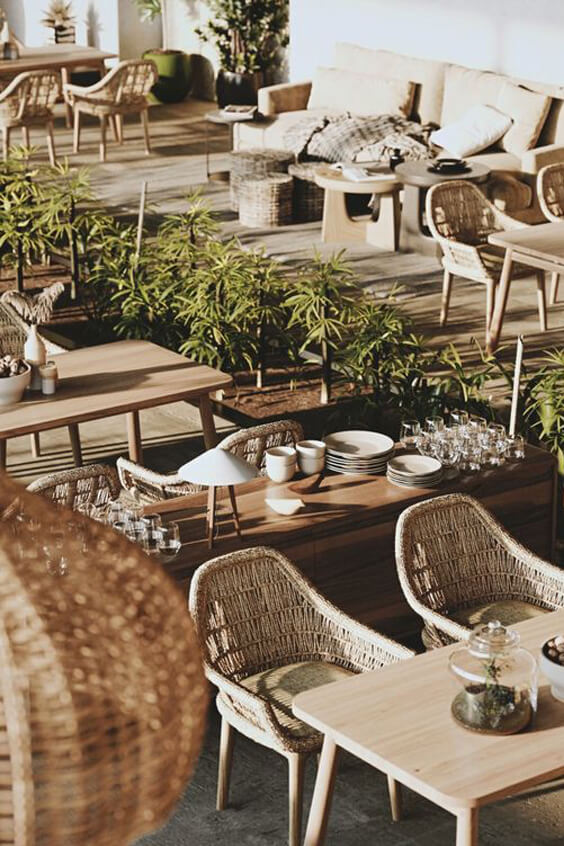
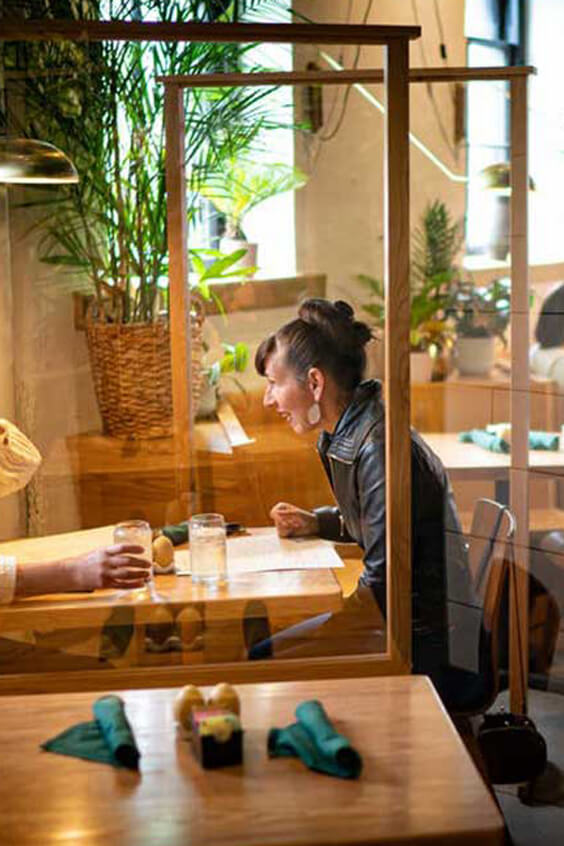
The first spaces to reopen were the terraces, allowing for social distancing relatively easily without interfering with the design of the space. The rule of maintaining a minimum distance of 2 m between tables was the most important rule, and owners in the HoReCa industry adapted by separating tables with potted plants, dividing or decorative panels. Many opted for the option of creating glass or plexiglass bungalows to separate each table. Other options would be to separate tables with dividing panels made of transparent Plexiglas or other materials so that they integrate into the space’s design.
We still spend time on the terraces, where the cold and bad weather was truly a problem. But the issue was turned into an advantage by arranging the terraces for unfriendly weather.
– Heaters were the most affordable option to create constant heat for customers, but also a welcoming atmosphere;
– Fluffy and warm blankets placed on the backs of the chairs were also a solution;
– Some terraces were closed or partially covered with transparent foils or retractable roofs, so that customers would be protected from the cold;
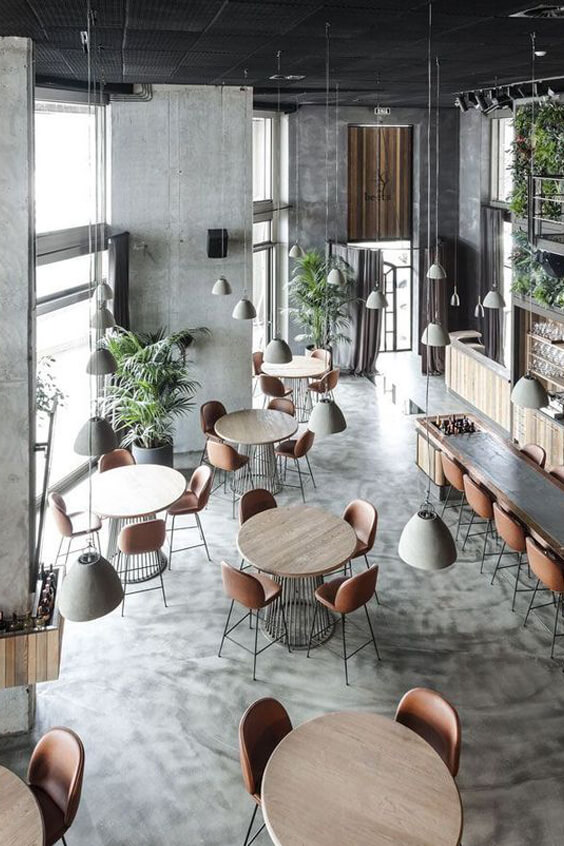
As for tables and chairs, both in the restaurant and on the terraces, round or square tables are recommended, with armchairs or chairs placed around them, so as to maintain the distance between the tables but also to create a pleasant atmosphere and a dynamic space. Of course, the furniture must be specifically designed for HoReCa to ensure it lasts over time, as the items will be cleaned and disinfected after each customer, making wear and tear more intense.
Whether we are talking about restaurants, terraces, hotels, there has been an increase in the number of hospitality units that have turned to digitalization, so as to avoid contact between people as much as possible. Many hotels have started to replace the classic reception with tablets or digitalized panels through which customers can check in themselves. For example, many hotels in Europe installed digital panels through which customers can order additional services, such as breakfast, SPA, or request a change of towels, so direct contact between the customer and the staff would be minimized. In many restaurants, cafes, bars, the virtual menu was implemented – with the help of your personal mobile phone you scan the QR code on the table and therefore you can browse the menu.
Every space in the HoReCa industry should offer guests comfort and safety and most likely, in the future, the main requirement for building and arranging hospitality spaces will be to create places that inspire safety. Cottages, bungalows or containers with direct access to the outside environment will be the most sought-after accommodation options, as an example.
Even though the pandemic has greatly affected the HoReCa sector, many owners have seen this as a challenge, thus becoming more creative in arranging spaces intended for inviting customers.
Pictures source: Pinterest