Categories
Design Idei

Recommended Colors for a Child’s Room

The Psychological Effects of Colors in a Child’s Room

Learn how colors can affect a child’s behavior.

When we decorate a room, we choose colors based on our preferences. This is often the right choice, but selecting colors in interior design is not that simple. Each shade has different effects on the human body and mind, so it is important to take this aspect into account, especially when the subject of interior design is the child’s room.

Learn how colors influence a child’s development and behavior and choose the right color for her/his room.

WARM COLORS

1
Modern color scheme

Warm colors typically stimulate the mind and energize the body. They make large spaces feel warm and inviting. However, they are not particularly relaxing, so they are not recommended for the rooms of very energetic children.

2
Use an orange accent to give a modern touch to the decorated space.
3
For a balanced decor, combine warm and cool shades.

Warm, comforting, and cozy, orange is a color that stimulates and encourages social interaction and communication. However, too much orange, especially if it’s a strong shade, can be overstimulating.

YELLOW

4
Use yellow in combination with a neutral tone like gray to reduce the intensity.
5
Play with different shades of yellow and a touch of blue for contrast in the interior design of the room.

Yellow is a cheerful and vibrant color that gives any room a sunny and bright look. It is a color associated with happiness. Depending on the shade and intensity, subtle yellow improves concentration while bright shades can stimulate memory.

RED

6
Use red only as an accent color in combination with cool colors.

Red is one of the colors that is not recommended for a child’s room, since it is associated with aggression, inability to focus and causing headaches. Of course, this only happens if it is used in excess. If used correctly, red can actually have good effects, such as energizing the body and increasing athletic ability.

PINK

7
Such a rich decor in all shades of pink may be okay, but only for a short period of time.
8
A much better option is a balanced combination of pink and white.

This is the color universally associated with girly things and princesses, and it’s no coincidence. Pink is a calming and relaxing color, evoking femininity and empathy. Initially, it has a calming effect, but it can lead to agitation and anxiety, so don’t use only pink in your interior design.

COOL COLORS

Indraznet
Bold Decor

Compared to warm colors, cool tones usually have a calming effect on the body and mind. They are used in interior design because they create spaciousness and comfort. However, dark shades should be moderately and properly used in interior design in order to avoid creating a gloomy atmosphere.

BLUE

10
The white-blue combination is excellent if you want to achieve a calm and serene interior design.

Blue is the opposite of red. It has a calming effect, lowers blood pressure, and reduces anxiety and aggression. Blue is also a good color choice if you want to create a cool environment in a warm, humid place. However, some specific shades, such as gray-blue, can create a rather gloomy ambiance.

GREEN

11
Green is a calming and soothing color, so you can’t go wrong using it in your room’s interior design.
Verdele este abundent in natura, folositi-l ca sursa de inspiratie
Green is found anywhere in nature, use it as a source of inspiration

Green is associated with nature, symbolizing health and well-being. It has a calming effect on the body, increases focus, and some studies show that it can even improve reading ability. These characteristics make green the optimal color to use in interior design for study environments.

PURPLE

13
Purple takes on the attributes of the colors red and blue, but it depends on the shade that was used.
14
This color is also glamorous and mysterious, perfect if you want to create an interior design with a more sophisticated look.

The color is associated with royalty and luxury, but also with wisdom and spirituality. Pastel shades such as lilac and lavender are calming and serene. At the same time, darker shades can be harsh and aggressive.

WHITE

15
In interior design, add a bit of warmth to a white setting by using subtle earthy colors.
16
Add variety to interior design by incorporating strong contrasts, like black and white, to break up the monotony.

Angelic and pure, white is associated with innocence and inspires a calm and cool atmosphere. White is also associated with secrecy, modernity, so it is best to add a splash of color to your interior design to evoke openness, communication.

GRAY

17
A few subtle shades of pink, green, and purple can create a balanced interior design.
18
In interior design, yellow is the perfect accent color to brighten up a gray interior.

Although gray is often seen as a gloomy and sad color, it can also evoke other emotions. For example, gray inspires contemplation and thus has a calming and relaxing effect. However, it mostly inspires loneliness, so it is preferable to use it in combination with warm tones and bright colors in interior design.

BLACK

19
Most often, black is used in furniture and placed in bright interiors.
20
Although not a conventional choice in interior design, a darker decor for a child’s room can be relaxing.

Black elements are rarely used in the interior design of children’s rooms. It is a strong and dark color and should be properly used in interior design. It is recommended to use it if the room has large windows, lots of natural light and it is recommended to use it in combination with contrasting shades.

BROWN

21
Use contrasts to your advantage to highlight certain accents of the interior design.

Earthy, warm and stable, brown is a great color for decorating a child’s room. However, try to use either dark brown or beige to avoid creating an unpleasant decor due to associations with ugly and dirty things.

Categories
Design Idei

The interior design of the dressing room

Efficient dressing room arrangement

Expert advice and strategies for completely eliminating chaos and creating well-organized closets.

  1. Double Bar – Hanging rods with hooks mounted over existing rods are a smart, inexpensive, and quick way to create extra space for small clothes.        1
  2. Valet Hook
    On the outside of your closet, mount a hook or removable rod to hang freshly cleaned and ironed clothes before putting them in the closet. You can also use it to prepare clothes for parties, vacations, or for going to the office the next day.  2
  3. Hangers
    There’s a good reason why wire hangers are free: They’re practically worthless. If you want to prolong the lifespan of your clothes, don’t hang them on flimsy wire or plastic hangers. Wooden hangers and padded hangers are the best ways to keep your clothes looking new.
    3
  4. Baskets
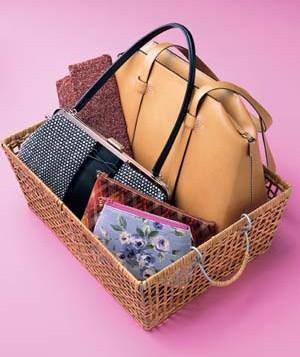
    Place wallets and small clutch bags in baskets. This keeps them organized and prevents them from getting tangled and damaged.        4
  5. Hooks
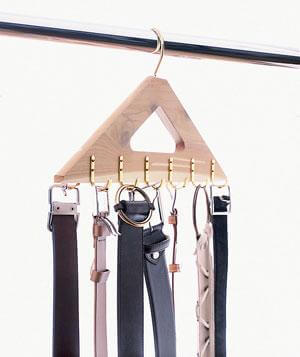
    Straps invariably get tangled or lost on the floor or in the closet. The solution? An elegant hook that keeps them organized and takes up minimal space. This way they will be easily accessible and easy to find.                          5
  6. Boxes
    Instead of filling your dresser drawer with various jewelry boxes, store them in your closet. In the attached photo, small labeled boxes are nested inside a larger box that can be placed on a shelf.                           6
  7. Shoe “pockets”
    An innovative, shorter version of the traditional shoe rack fits perfectly with a double-bar system.                           7
  8. Shoes on the door
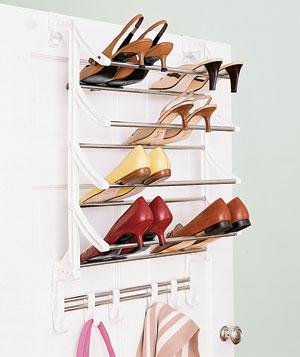
    A simple trick: Mount a shelf on the back of the closet door where you can store several pairs of shoes, scarves, and bags.                                                       8
  9. Shoe rack
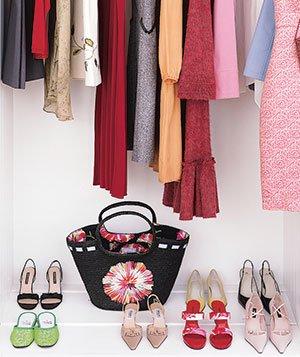
    If you store your shoes on the floor, for a better view of your collection, opt for a sloping rack that rises from front to back. Opt for one with semicircular rubber strips or other materials that prevent your shoes from slipping.                     9
  10. Clear Shoe Boxes
    Clear plastic shoe boxes are great for shoes, but they also make perfect drawers for underwear. Offering visibility, flexibility, and accessibility, they meet the concept of smart design.                                                                           10
  11. Hanging shelf
    If you don’t have enough shelves in your closet, hang a fabric shelf on your clothes rail. A unit with drawers can also provide storage for socks and underwear.                                                                                        11
  12. Shelf dividers
    These will prevent leaning towers of cashmere from tipping over (even if the sweaters aren’t perfectly folded) and keep things organized.
    12
Categories
Design Idei

How to design a small bathroom!

One of the biggest challenges is designing a small bathroom in a way that accommodates all the essential items.

There are so many objects, from makeup kits, razors, personal care products, towels, everything has to find its place in a cramped space.

An interior designer will recommend reliable solutions to enhance your small bathroom, improving its practical aspects at the same time.

baie

Add a shelf above the sink for easy access to the things you use every day. The space above the toilet can be an inspired solution for shelves or a basket for magazines, towels or cosmetics. Light colors could also be a solution for making your bathroom seem less cramped, along with practical furniture pieces in the same shade.

baie3

The shower cabin design has been improved in the recent years, leaving the classic version in the past. The bathroom design should consider introducing an open shower cabin, with a glass door, so that the bathroom appears larger than it actually is. Along with it, the zigzag design tiles complement the entire concept so that the space appears more extended.

baie2